

 |
|
 |
|
The Wildlife Land Trust sanctuaries in queensland |
|
Roy and Wendy Adams are wildlife carers and the
owners of Waarna, a property located
in Septimus, approximately 55km West of Mackay.
The 48.6 hectare property was purchased with the intent of being a home,
hobby farm and dedicated native wildlife sanctuary used for wildlife
rehabilitation and release for FAUNA Whitsundays. Roy and Wendy have revegetated Waarna with
the assistance of agreements with Land for Wildlife and the Pioneer Catchment
and Landcare Group Inc. Waarna is
predominantly rainforest, open native grassland and timberland, and features a
creek and waterfall as well as gullies and mountains. Wildlife known to be present on Warnaa
includes agile and rock wallabies, possums, sugar gliders, frill-necked
lizards, goannas and red-tailed black cockatoos.
 Patricia Kelly is the sole director of TJM Select Investments Pty Ltd, owner
of Dilladerri, an 1847 hectare
property located in Warroo, approximately 40km South-East of Inglewood. The property was purchased for conservation
purposes, with the intent of being dedicated habitat for native wildlife. Patricia aims to improve and revegetate the
portion of land cleared by a previous owner, while protecting and maintaining
the remaining native vegetation. The
property is predominantly composed of trap rock country undulating to a steeply
ridged platform. Around one third was
bulldozed, but not stick-raked, by a previous owner. The remaining two thirds is primarily
comprised of old growth box-gum grassy woodland, and abounds in a wide variety
of native wildlife.
Patricia is also the director of Organised for
Life Pty Ltd, owner of Lockhart,
a property located in Tarome, approximately 55km South-West of Ipswich. The property was purchased with the intent of
being dedicated habitat for native wildlife as well as to run small herd of
cattle. Patricia aims to continue with
native habitat rejuvenation on Lockhart, which is recognised as a Land for
Wildlife property through an agreement with the Queensland Environment
Protection Agency. The sanctuary covers approximately 40 hectares of
predominantly callistemon, casuarina, melaleuca, brush box, ironbark and blue
gum vegetation types, and is close to the World
Heritage listed Main
Range National
Park. Lockhart
forms a creek-line along the upper reaches of Warrill Creek, which is
picturesque with pools and riffles. The
brush box gully which runs across the property is spring fed, while eucalypt
forests on the drier ridges form a link across the property. Wildlife species known to be found on
the property include but are not limited to wedge-tailed eagles, crimson and
pale-headed rosellas, sulphur-crested cockatoos, king parrots, nankeen
kestrels, variegated fairy wrens and many other bird species.
 Kabul is a 25 hectare a
property located in Burbank, approximately 20km
South-East of Brisbane,
which is owned by Sally Jenyns. Sally
intends to continue to protect and enhance Kabul’s biodiversity to
create a refuge for the local wildlife through the conservation of
native bushland found on the property.
The properties conservation values are afforded protection through a Conservation Covenant with the Brisbane City Council, and it
is predominantly composed of two basic
vegetation types: open eucalypt woodland with a grassy understory on the more
exposed slopes and ridges; and eucalypt woodland with a rainforest
species-dominated midstorey on the lower slopes and along gullies and
watercourses. Wildlife known to
be present on Kabul
includes red-necked and swamp wallabies, sugar gliders, koalas, echidnas,
powerful owls, white-throated nightjars and rufous fantails, and wedge-tailed
eagles nest on the property. The site has a range of habitat features including exposed
rocks on the hillcrests and ridges, grass tussocks, fallen timber and
watercourses. Many advanced age trees
and habitat hollows are common.
|
The Bat Hospital, owned by Jenny Maclean, is 5 acres of land nestled in a forested valley surrounded by Mt Baldy State Forest on the Atherton Tableland. Not only is the property a sanctuary for wildlife, but also a centre for wildlife rehabilitation, education and ecotourism. The property is also the base for a not-for-profit community group and registered charity, Tolga Bat Hospital, which aims to improve the public's perception and understanding of bats. The group takes its name from the nearby Tolga Scrub, a fragment of critically endangered Mabi rainforest that is home to up to a million fruit bats at some times of the year. You can read more about the critical work conducted on the sanctuary at http://www.tolgabathospital.org/. Since purchasing the property in 1979, Jenny has planted many thousands of native trees. The sanctuary has abundant bird life, while the mammals include tree kangaroos, red-footed pademelons and possums.
Cooper Creek Wilderness is a 67 hectare World Heritage listed property located in Diwan, near the Daintree National Park, predominantly made up of complex mesophyll vined rainforest. Among its inhabitants are endangered cassowaries, musky rat kangaroos, rare Bennett's tree kangaroos and many other fauna. There are a number of primitive flowering angiosperms, ferns and palms that provide evidence of the evolutionary development of the rainforest from the Jurassic era. 455 plant species have been recorded as existing within the property, along with over 113 invertebrate, 10 fish, 7 amphibian, 87 bird, and 31 mammal species, as well as 21 reptile groups. Owner Prue Hewett's conservation efforts are made possible through funding derived by a sustainable ecotourism wildlife walk business she runs on the sanctuary, her primary goal is “participation in a community that resides in harmony with its surroundings and is valued by Australia as an exemplary model of rainforest habitation based on conservation and sustainable ecotourism”. The land is protected as a Nature Refuge under the Queensland Nature Conservation Act, 1992, and with its World Heritage status, this freehold Nature Refuge is one of the best-protected portions of land in Australia.
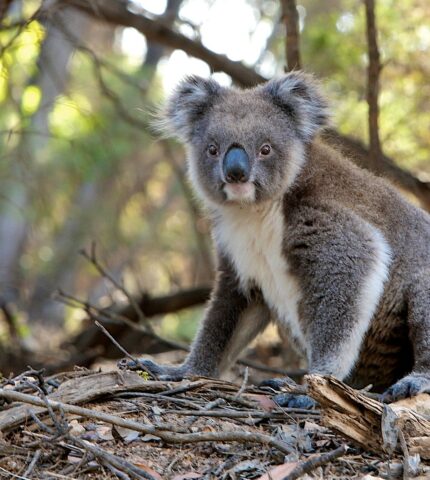
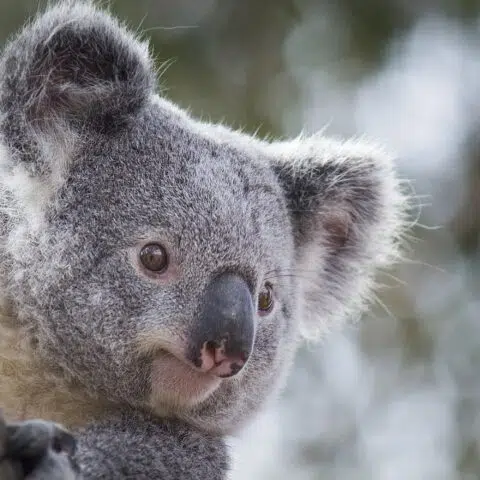
The Ipswich Koala Protection Society Rescue and Rehabilitation Centre was purchased 16 years ago in Mt. Forbes, near Ipswich, with the intent of being a base for a 24/7 wildlife ambulance and rescue and rehabilitation centre, a release site for native wildlife, and koala habitat. The society is a non-profit organisation run entirely by volunteers, based on President Ruth Lewis's property in an area which is home to one of the largest and healthiest population of koalas in South East Queensland. The sanctuary covers approximately 1 hectare of bushland, and aside from koalas wildlife present includes eastern grey kangaroos, several species of wallabies, possums, gliders, flying foxes and bats, reptiles, echidnas and a large number of bird species. Merran and Carl's Refuge is approximately 2 hectares of bushland located in Hideaway Bay, approximately 40km from Proserpine. Merran and Carl are aiming to encourage native wildlife to occupy their property by protecting the current habitat through measures such as revegetation, removal of weeds and the establishment of nesting boxes. Wildlife such as bandicoots, green and brown tree snakes, possums, grey kangaroos, green tree frogs, and a wide variety of birds, including brolgas, red-tailed black cockatoos, rainbow lorikeets and pale-headed rosellas live amongst the bloodwood, iron bark, grass tree, she-oak, lomandra, melaleuca, pandanus, poplar gum, acacia and cocky apple vegetation.
Heather’s Refuge is a 192.74 acre sanctuary in Coolabine, that forms part of a larger habitat area linking Mapleton State Forest through to the Conondale Ranges. Containing 148 acres of bushland, the property is comprised of diverse habitat types of native forest and regrowth including eucalypt open forest, rainforests, and blackbutt tall open forest. There is a permanent waterhole, side gullies and natural springs, and a waterfall and creek running through the centre of the sanctuary. A diversity of wildlife is present in Heather's Refuge, including wallabies, echidnas, possums, native mice and rats, goannas and other reptile species, as well as a wide variety of bird, invertebrate, and amphibian species. Heather Wood's primary goal is to restore the land to its natural state as much as possible, to provide habitats and a sanctuary for native animals.
Mount Monty Rainforest Nature Refuge is a 33.11 acre sanctuary near Gympie that is registered as a Nature Refuge with the Queensland Government National Parks & Wildlife Service. As such, Angus, Gem and William Hutton's sanctuary aims to conserve the area's significant natural and cultural resources. Located within a 5-10 km radius of six state forests, the property is comprised of a number of regional ecosystems, including notophyll and notophyll / microphyll rainforest, which contain a number of endangered, rare or vulnerable plant species. These vegetation communities also provide habitat for abundant birdlife on the property which includes regent and satin bowerbirds, green catbirds, and paradise riflebirds. Scrubby Creek provides a permanent water source for the numerous threatened flora and fauna species listed both within the state and nationally.
Oakview Wildlife Refuge is almost 196 acres near Gympie. On the fringe of known koala habitat, Anne-Marie Dinnen and Joe Schick's property provides a corridor of natural bushland in an area largely dominated by grazing properties. It is characterised by open eucalypt forests of spotted gum and other eucalypt species, grass trees, creek and water holes, riparian zone vegetation, rocky outcrops, gullies and hills that provide habitat for a range of species including swamp, black stripe, whiptail and redneck wallabies, eastern grey kangaroos, common brushtail possums, greater gliders, northern brown bandicoots, koalas, platypuses, lungfish, a myriad of birdlife, lace monitors and many reptile species. The riparian zone is fed by a creek and waterhole that provides habitat for the wildlife that Anne-Marie and Joe rescue and rehabilitate. They specialise in macropods but also care for a wide variety of other animals including flying foxes. Registered with the Land for Wildlife program, they are in the process of gaining a binding conservation agreement.
Licuala Rainforest Refuge is a 45.99 acre sanctuary on the southern side of the Alexandra Range, bordering the Daintree National Park, near Cape Kimberley and Mossman. Cheryll Williams and Tony Young's property is covered by undisturbed fan palm forest of conservation concern, and largely unexplored and inaccessible swamplands. It is a site of immense conservation importance that contains an abundance of rare and endangered species of plants and animals. The notophyll vine forests, and open and closed forests adjacent to the streams and floodplain provide habitat for some highly threatened wildlife species, including spectacled flying foxes, Bennett's tree kangaroos, southern cassowaries, and spotted-tailed quolls. The sanctuary is also home to amethystine and local water pythons, as well as a range of species native to the Daintree region. Cheryll and Tony utilise the sanctuary to rescue and rehabilitate injured wildlife.
The Roost, Lynn Child's 100 acre sanctuary, is situated within an isolated pocket 80 km north of Bundaberg that is surrounded by national parkland. It provides a valuable corridor between Deepwater Creek National Park and the Deepwater Conservation Park. Deepwater Creek is a special acid freshwater wetland system that is registered with the Australian Heritage Commission. The Roost contains 95 acres of non-cleared land that is in its original pristine condition, and the property is unique in the area for its number and extent of flora species and communities. It contains a wide spectrum of vegetation including sclerophyll open forests, mixed eucalyptus / Livistona open forest, complex notophyll closed vine forest, low woodland regrowth, Eucalyptus tessellaris open forest, mixed open woodlands and coastal casuarina open forests. It provides sanctuary to a variety of fauna and is a significant nesting site for listed marine turtles, including loggerhead, leatherback, green and flatback turtles.
George's Refuge was purchased with the intent to preserve the natural beauty of the countryside, and its flora and fauna. Located 137 km north of Toowoomba, the sanctuary comprises 40 acres of primarily farming land on open forest country, with a third dominated by narrow-leaf ironbark. George Sives' property features four dams, and a river on the northern boundary which provides ample water for the abundant birdlife and links the corridor between Dangore and Cushnie State Forests, both within a 5-10 km radius of the sanctuary. Wildlife present on the property includes wallabies, geckos, frogs, and a wide variety of birds including kookaburras and finches. George's primary goal is to use the property sustainably.
Jindawarra is a 2068 acre sanctuary located approximately 120 km from Bundaberg. Registered under a Land for Wildlife Agreement with the Queensland Government, Lyn and David Grimes' property consists of mainly dry eucalyptus forest featuring narrow leaf ironbark and spotted gums, as well as other native grasses, legumes and grass trees, with water available in creeks and waterholes. There is also a waterfall, a geological rarity in the area, which overlooks some relatively inaccessible rainforest vegetation. Lyn and David have spotted several animals on the property including rock-wallabies, kangaroos, wedge-tailed eagles, parrots, owls and dingoes.
Woorinyan is a 74 acre wildlife sanctuary adjacent to Mt Greville National Park. It is covered in open eucalypt forest with montane heath on the exposed rock face and rainforest in some sheltered pockets. This habitat provides a bush haven for many native species including the powerful owl. Eileen Hogan intends to protect her property for the benefit of wildlife in the long-term.
Wamuran Nature Refuge is a 27 acre sanctuary contiguous with the Mt. Miketeebumulgrai section of Glass House Mountains National Park. Subject to a Voluntary Conservation Agreement with the Moreton Bay Regional council, the whole area owned by Tony and Wendy Cole is almost entirely vegetated and part of an isolated tract of vegetation of state conservation significance. There is also a swamp at the front of the property, a small creek joining a neighbouring property, and 2 small dams providing a permanent source of water for wildlife. Together, these habitats provide sanctuary for numerous flora, fauna and ecosystems listed under both the QLD and commonwealth environment legislation. Wildlife present on the property include red necked wallabies, platypuses, glossy black cockatoos, powerful owls, grey goshawks, sooty owls and regent honeyeaters. The property also provides a prefect setting for Tony and Wendy's wildlife rescue, rehabilitation and release work.
Thylogale Nature Refuge is 8.25 acre sanctuary located approximately 62 km from Cairns, that is registered as a Nature Refuge with the Queensland Government National Parks & Wildlife Service. David and Diane Armbrust's sanctuary contains complex notophyll vine forest and a small area of closed vine forest, as well as supporting a number of rare and endangered plant species, including Sankowskya stipularis, listed as endangered under both the QLD and Commonwealth environment legislation. The property also provides habitat for a number of animal species including green possums, red-legged pademelons, musky rat-kangaroos, platypuses, water rats, yellow-footed antechinuses, spectacled flying foxes, a wide variety of birds including the southern cassowary, and many invertebrate, amphibian and reptile species including the Mt Lewis crayfish. David and Diane utilise the sanctuary for low-impact nature based tourism to raise awareness about wildlife vulnerability and the importance of maintaining natural habitats.
The Maples is a 171.26 acre property, located at Millaa Millaa. Olive & Reginald Waltham have undertaken significant reforestation efforts have been undertaken over the past six years that have lead to the planting of over 11,000 rainforest trees. The property provides habitat for rare and endemic plants and mammals, as well as an abundance of bird and frog species, and has been the site of important research studies on reptiles, tree kangaroos and plants. Olive and Reginald have re-introduced a number of frog species and plan to continue their reforestation efforts, as well as maintain protection of the remnant rainforest and creek corridors.
Caron's Refuge is a 6.4 acre wildlife sanctuary in the Lockyer Valley Catchment Area. It is registered as a Land for Wildlife property with the Qld Government for the high conservation values of the understorey, mid-storey and canopy vegetation, as well as the riparian habitats. The sanctuary provides habitat for many bird species including tawny frogmouths and white cockatoos, possums, koalas, wallabies, monitor lizards, bearded dragons, snakes, green tree frogs and water fowl. Caron Isaac is a dedicated wildlife rescuer and carer, being a member of AAROW, ONAAR and Wildcare, and assisting Nature Call in SE Qld to relocate and raise wildlife that has been stranded or injured after land-clearing and road construction activities. Caron intends to maintain and increase the natural bush and conservation values of the sanctuary for the benefit of all wildlife.
Greene Dale is a 349 acre sanctuary at Glastonbury. In recognition of its importance for conservation in the region, Noreen and Elaine Kewin's property is registered as a Nature Refuge with the Qld Government, and is also registered with the Qld Land for Wildlife network. An old dairy farm, the property is comprised of a great diversity of habitats including blue gum, iron gum and gum top box, two areas of remnant dry scrub, and a good covering of kangaroo grass. Bordered on one side by State Forest and the other by a seasonal creek, the sanctuary is home to a koala population, several wallaby species, sugar gliders, echidnas, a varied bird fauna and several rare plant species.
More properties are joining this global network everyday. For more information on becoming part of this movement see the Join page. Or if you would like to talk about this invitation directly, please call Evan Quartermain on 1800 333 737 or email him at evan@hsi.org.au
|
 |
|  |