

HSI is more committed than ever to educate the public
about the cruelty of the fur industry.
Fur sales have risen around the world following campaigns by some of the
world’s leading designers, fashion magazines, and celebrities.
Last year more than 50 million animals were slaughtered
in fur farms and around 10million were trapped in the wild to satisfy the growing
demand for fur. If that is not shocking
enough, an 18 month undercover investigation completed by our US office in 2003
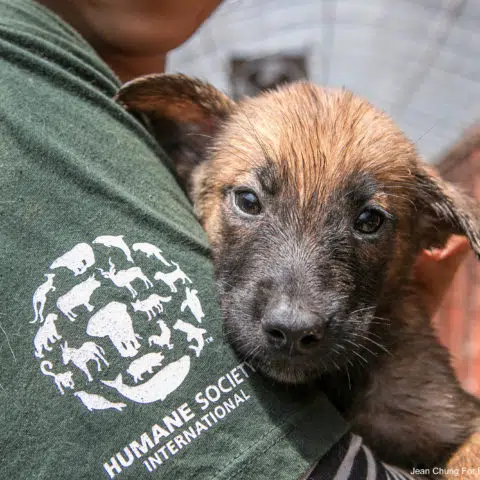
exposed the brutal and cruel slaughter of dogs and cats for fur. In 2004 at least 2 million dogs and cats were
killed in Asia, but the last few years have seen such an increase in demand
that this figure is now thought to be closer to 10 million! The industry makes no distinction between
strays and pets, rounding up any animal they can find. The recent escalation of pets being stolen in
Asia indicates not only the tragedy of this horrific market, but also the level
of demand from the fashion world for coats, trims, hats, and even stuffing for
children’s toys.
CAGED FUR – THE INSIDE STORY
Each year more than 50 millions animals world-wide live
their entire lives in cages only to be killed inhumanely for fur. Living in these filthy, confined conditions
causes numerous physical and behavioral abnormalities induced by the stress of
the severely cramped conditions.
Cages leave the animals little room to move around - mink
cages are made of wire, measuring about two and a half foot by one foot wide,
and one foot high. Water is provided by
an automated system which is sometimes frozen leaving them with no water for
days, and food, a mixture of ground up animal remains, including minks, is
placed on top of the cage to fall through.
Intensive confinement makes natural activities impossible and cage
raised minks commonly suffer obsessive-compulsive stereotype behaviour like
pacing, self-mutilation, and cannibalism.
The animals are killed just after their first winter coat
grows, at 7 to 10 months of age. The
industry euphemism for their final slaughter is the “introduction of unconsciousness”
– but in fact they are either shot, gassed, poisoned, subjected to electric
currents in the anus or mouth, stamped on, or thrown against the ground. Many are still alive and remain conscious
during the skinning process. HSI
believes that no animal should be subjected to this kind of “life” or death in
the name of fashion.
TRAPPING IN THE WILD
Wild animals are usually caught in steel-jaw traps, an
incredibly cruel and inhumane method which cripples the animals, but doesn’t
usually kill them. One in four of these
trapped animals will escape by chewing off their legs, only to die a painful
death later from gangrene, blood loss, or predation. The ones that don’t get away and survive
their ordeal end up being killed in a horrific way for their fur.
They are also caught in Body-Crushing Traps designed to
shut with a scissor-like action when an animal walks or swims through it. The Snare is the most primitive,
indiscriminate and inhumane trap used.
They strangle their victims or crush their vital organs, leading to an agonizing and often prolonged death.
And then there are the incredible number of companion
animals and non-target species accidentally caught up in trappers devices. In one study, an average of 10.8 non-target
animals were trapped for each target animal caught. This would mean for the 10 million wild
animals caught and killed in traps for the fur market, another 100 million
animals die. Photos: Vest purchased in Sydney in 2011 containing Raccoon dog fur Dogs in chains - HSUS investigation
For more information on the fur industry, please follow the links below:
|